State of taste
2026-03-08 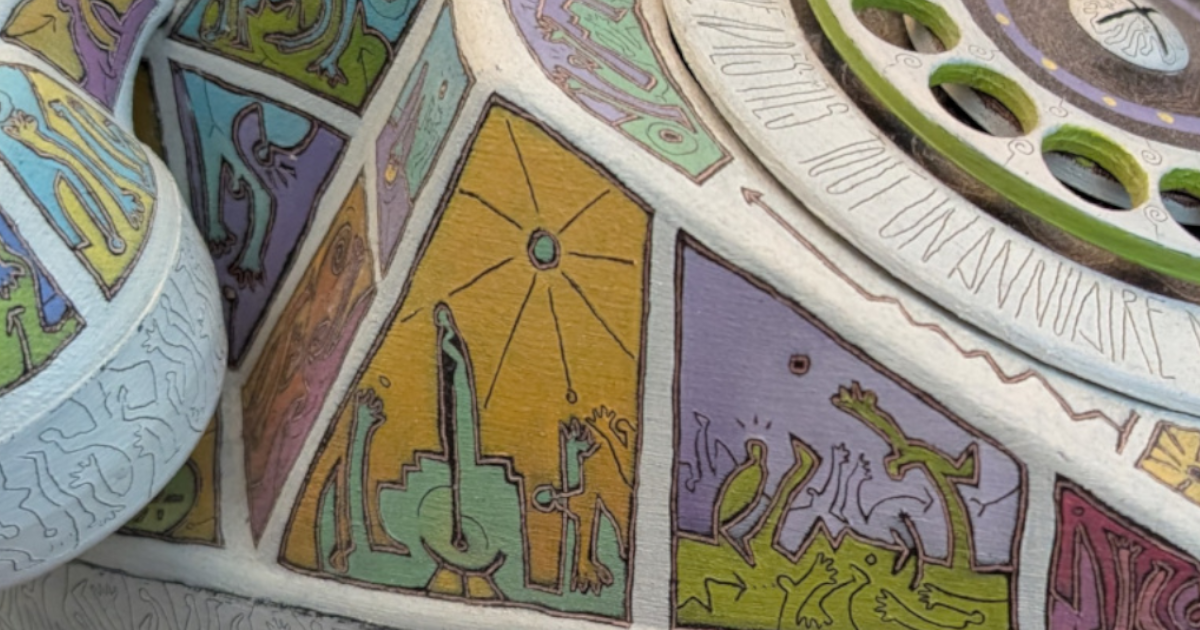
I started painting when I was 8, and became serious about it around 16. I stopped painting when I was 40; more about that in another post, perhaps.
While I was working to cultivate my own style, exposing canvas and receiving comments from visitors, I did learn a thing or two about the relationship people have with taste, their own and others'.
For it unearths deep secrets from the creator, art is deeply personal. It can provoke earthquakes in the soul of the watcher, provided the artwork and the receiver happen to resonate on the same frequency.
I have experienced visitors meeting an artwork, and falling in love, as if made to be together all along, even before the painting was envisioned. In the context of a gallery exhibition, these watchers would end up buying the painting. If it happened to friends visiting the workshop, they would often leave with a gifted painting. Lovers must be together. This match making aspect of creation explains why I never missed the pieces I gave out.
The amazement of these star-crossed lovers is not however what I want to write about. I'm interested in what happens in the intermediary state, where the level of interest sparks comments and questions, and does not trigger a match between the artwork and the viewer. The expression of taste lies in this interstice.
This is the state when conversations around taste can appear.
Opinions about colours, shapes, taste and fragrances. Arguments one can only trigger when different interpretations of a shared reality cross fire. Stands which end in a final 'it depends' from a tired third party, after which all return home with illusory confirmations of the universality of their own preferences.
The tricky twist lays in shared cultural habits, the common framework which encompasses all our weird personal tastes, the box we want to boast to think out of. I never got this thing about the box by the way. As long as there is a box, if you think out of it, your point of reference remains... the box. And by virtue of magic, destroying a box always creates a new container. From artistic movement to manifests, history of art is just a series of beautiful minds trapped inside infinite unwrapping Russian dolls.
Creativity can only happen around and / or inside the box.
A piece of stone.
A time section.
A wood board.
A scene.
A file.
Constraints of matter, as a finite reality, define the outlines for infinite creation possibilities. So who cares of the box, really. The relationship to the box, the tension with it, and what it reveals about us, is what fuels creativity.
Expressing taste reveals the contours of one's relationship to the box. A sociological approach can free us from the illusions of personal truths. It is religion, in that it links cultural groups and signals membership. It is political, in that it divides and negotiates. And this is why it is so interesting, because deep inside, I know this green colour vibrates in me, I know this shape is the thing of beauty, and I'm ready to fight for the truth I feel. It is so vibrant, that I can't see I'm actually acted by a sense of belonging that desires eternity and absoluteness.
Monumentum aere perennius
I'll leave it here for now.